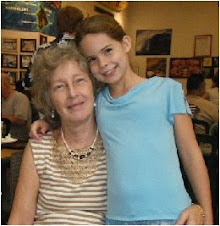
My granddaughter offered me the choice of one of her TicTacs or a stick of gum. Neither one was at all tempting. Usually the only time I'll have some gum is if my ears are popping on an airplane. Sodas don't tempt me either. All that sugar (or sugar substitute) and misc. ingredients are very off-putting for some reason.
I found this article, leapfrogging from Organically cooked, as we habitually do on the web, and thought it worth posting the main points here too, as it reinforces what I've been mulling over, and talking about for some time. You may think it freaky that I'd eat some mushrooms growing wild outdoors, but shopping in your local supermarket can prove more dangerous to your health.
From the article reviewing Michael Pollan's lecture: 7 Rules for Eating
He's even done a Manifesto. Altogether, I found his ideas helpful, also echoing what Michael Ruhlman has to say about the food industry and our cooking/ eating habits, joined by some other well-known chefs, food writers in this debate.March 23, 2009 -- Food author Michael Pollan in a lecture given last week to an overflow crowd of CDC (Centers for Disease Control and Prevention) scientists.
As part of an effort to bring new ideas to the national debate on food issues, the CDC invited Pollan -- a harsh critic of U.S. food policies -- to address CDC researchers and to meet with leaders of the federal agency.
"The French paradox is that they have better heart health than we do despite being a cheese-eating, wine-swilling, fois-gras-gobbling people," Pollan said. "The American paradox is we are a people who worry unreasonably about dietary health yet have the worst diet in the world."
In various parts of the world, Pollan noted, necessity has forced human beings to adapt to all kinds of diets.
"The Masai subsist on cattle blood and meat and milk and little else. Native Americans subsist on beans and maize. And the Inuit in Greenland subsist on whale blubber and a little bit of lichen," he said. "The irony is, the one diet we have invented for ourselves -- the Western diet -- is the one that makes us sick."
Snowballing rates of obesity, diabetes, and heart disease in the U.S. can be traced to our unhealthy diet. So how do we change?
7 Words & 7 Rules for Eating
Pollan says everything he's learned about food and health can be summed up in seven words: "Eat food, not too much, mostly plants."
Probably the first two words are most important. "Eat food" means to eat real food -- vegetables, fruits, whole grains, and, yes, fish and meat -- and to avoid what Pollan calls "edible food-like substances."
Here's how:
- Don't eat anything your great grandmother wouldn't recognize as food. "When you pick up that box of portable yogurt tubes, or eat something with 15 ingredients you can't pronounce, ask yourself, "What are those things doing there?" Pollan says.
- Don’t eat anything with more than five ingredients, or ingredients you can't pronounce.
- Stay out of the middle of the supermarket; shop on the perimeter of the store. Real food tends to be on the outer edge of the store near the loading docks, where it can be replaced with fresh foods when it goes bad.
- Don't eat anything that won't eventually rot. "There are exceptions -- honey -- but as a rule, things like Twinkies that never go bad aren't food," Pollan says.
- It is not just what you eat but how you eat. "Always leave the table a little hungry," Pollan says. "Many cultures have rules that you stop eating before you are full. In Japan, they say eat until you are four-fifths full. Islamic culture has a similar rule, and in German culture they say, 'Tie off the sack before it's full.'"
- Families traditionally ate together, around a table and not a TV, at regular meal times. It's a good tradition. Enjoy meals with the people you love. "Remember when eating between meals felt wrong?" Pollan asks.
- Don't buy food where you buy your gasoline. In the U.S., 20% of food is eaten in the car.
There is a spiritual parallel here. What the world serves up as true and right, depending on the cultural norms of the time and place, the politically correct thing to believe, ain't necessarily so. We are blessed to have our Creator's Word on the subject of truth, the Operating Manual as it were, for life. Just as we want to get our water filtered and pure, before we drink it down, there's for sure a lot of garbage that needs sorting out of what goes into our belief systems.
Another good parallel is the time issue. We don't have time to shake a few ingredients together in a bottle for our own salad dressing, but we can find the time to comment endlessly on blogs, or... We don't have time to spend meditating on Scripture and in prayer but... what are our priorities supposed to be anyway?