Well, excuse the heck out of me for a short (maybe not) rant about the flu that Swine don't spread, but that is definitely making a bundle for the drug industry. In a struggling economy, I guess that would be the ticket to wealth and a happier life. Buy into pharmaceutical stocks.
Talk the government into fining individuals for not getting a shot or inhaling a dangerous vaccine. Insist all school children be vaccinated. Push media hype on the big epidemic that doesn't exist. I did have a case of "Swine Flu" myself, and guess what? It was the mildest "flu" I've ever had. I really cannot believe some of the invidious things people will do to make a buck. It's hard to know where to start. Maybe with the mercury content beyond safe levels, aluminum and other toxins? Or, with the fact that more people died from polio after mass vaccinations?? Meanwhile, folks,on the bright side, there are inexpensive natural remedies, such as Vitamin D, which is an excellent preventative.
The Examiner.com, is a good place to start, by asking some questions we should all be considering. If you have elderly parents, children in school, are a health care provider, etc. etc., or just someone who believes what mainstream news sources, like the recent 60 Minutes infomercial, are pushing. More information here.
Wednesday, October 21, 2009

Saturday, October 10, 2009
The Music Man Opening

Photos courtesy of Daniel Nathaniel III
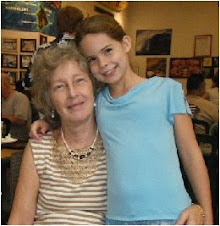
This is what you might call a Grandma's prerogative, brag post. Kealani, as Amaryllis, here in The Music Man, currently playing in Hilo's historic Palace Theater. Yes, she sings, dances, acts and plays the piano. What a kid! Hey, I'm allowed remember?


Saturday, October 3, 2009
Ode to Abiu

This is not a recipe. This is to thank God for his. For all the recipes of creation he has come up with; so many, simply unbeatable fruits in this world of ours, which really need nothing further from us. These Abiu, for instance. I can't think of any better way to eat them, than to just eat them. You'd have a hard time improving on anything so good.

Simply cut the fruit in half, then spoon out the creamy, instant vanilla custard. I have found that most of the visitors, friends, repair guys, etc., coming by, have never heard of Abiu.. They're not too well known, I guess you could say. A South of the Border phenomenon. At least Wikipedia has heard of them.
Some years the fruit flies get them and we have to tie little net bags around the fruit. This year, as I've mentioned, even though I did bag some, the unbagged ones don't seem to be bothered. My theory is that since there are so many little strawberry guavas fruiting right now, they're keeping all the fruit flies too busy to go looking under leaves for this fruit.

But who really knows the mind? of a fruit fly? The other day they were buzzing all around my Thai Basil. Maybe they're developing a taste for Thai food. I also like the way abiu don't all ripen at once. You have a sort of pantry effect here.
Thursday, August 6, 2009
Incarnations of Beach Glass
 Before moving to the Big Island, we lived for a number of years on the North Shore of Oahu, in a beachfront rental. I would occasionally pick up and save bits of beach glass, shells and sea scoured Kukui nuts (which, unfortunately got left behind in the move). The glass and shells came with me, and recently I was able to use some in a tile, shell and glass mosaic when our pool was built.
You can see a few pieces here and there.
What brought this to mind was a nail file, of all things, made of beach glass. But so beautiful, it reminded me of a dragonfly with its iridescent coloring. A form of fusion glass, layers fired one at a time over each other, by artist Katharine Easton. I would include a link for her, but have been unable to find one. Her company is Beachglass Hawaii and the files as well as some jewelry are available at various galleries on the island. One of those things you can't justify getting for yourself, but still have to buy for a special gift. For some strange reason, I would purchase earrings for myself, but it seems that a fancy nail file is just over the line one step.
From what I've read, the sandblasted file will last forever.

Another creative use of beach glass by local artist, Karin Sayre, known for her mosaic mirror pieces. This one in my study features a hula girl.
These represent a new spin for what was debris, waste material dumped into the ocean. Good when something positive can be made of it. Maybe a righteous purpose (more probably money-making) will also be found for the giant skein of floating plastic, located somewhere in the Pacific between Hawaii and California. Called the "Great Pacific Garbage Patch", according to some reports it's about twice the size of Texas. I read somewhere that it might be possible to convert it to diesel fuel. You go guys!
Thursday, July 16, 2009
Waipio Wedding
 The road was straight downhill from here. And, I do mean down. Four-wheel drive is required and absolutely necessary. The grandkids and I were all screaming at Bob to "Slow Down", as he's laughing. This is the way to Waipio Valley, scene of that wedding I mentioned a few weeks ago. I said I'd post a photo, but decided to do a post of photos instead. It was just so lovely.
In fact it was so nice, even these wild horses came.
Parents, this is the way to have your kids marry. No expensive hotel space to rent, catered meals, or troop of musicians for hire, absolutely no costs whatever. Well, hardly. Planned potluck food. Outdoors in a beautiful setting. I love it. Not the road getting there particularly, but once arrived, it was terrific.

Old friends, some good food, Prosecco and Tangerine Wine (made by yours truly) swimming, kayaking in Waipio river which empties into the sea here, surfing even. None of which athletic things I did. I sat and ate and talked and enjoyed the view though.

The Family of the Bride, were visiting from Canada. There was actually a wedding as well. We convinced him to put a shirt on first.


Their friends played some enchanting music,

and Bob joined in on pipe and harmonica.
Unfortunately, I must have been too busy eating to get any pictures of the food. Fresh caught grilled fish, bbq'd beef, wonderful salads, two delicious cakes (none of your commercial wedding cake here) and other stuff, which I'm forgetting at this remove in time.
Tuesday, June 2, 2009
Leaf of Life
 This is not it
It is poisonous, and handling the plants can apparently cause irritation and nausea. I didn't notice any, but after I read that, I immediately washed my hands.
On the other side of the spectrum of good and evil, there is the "Leaf of Life", (Kalanchoe pinnata) also known as air plant, miracle leaf, goethe and the katakataka plant.

This little baby, which heretofore I'd pretty much barely tolerated, has all sorts of wonderful, healthful applications. Also, though admittedly rather decorative, it has the ability to propagate itself from each and every dropped leaf. But now I'll be looking at my air plants differently. To give you an idea of the extent of its use, from an interesting site on Tropical herbs.
TRIBAL AND HERBAL MEDICINE USES
Kalanchoe is somewhat of a panacea to the indigenous peoples of the Amazon; they employ it for many different purposes. The Creoles use the lightly roasted leaves for cancer and inflammations, and a leaf infusion is a popular remedy for fevers. The Palikur mix the leaf juice with coconut oil or andiroba oil and then rub it on the forehead for migraines and headaches. To the Siona indigenous peoples, kalanchoe is known as 'boil medicine' and they heat the leaves and apply them topically to boils and skin ulcers. Along the Rio Pastaza in Ecuador, natives use a leaf infusion for broken bones and internal bruises. In Peru, indigenous tribes mix the leaf with aguardiente (sugar cane rum) and apply the mixture to the temples for headaches; they soak the leaves and stems overnight in cold water and then drink it for heartburn, urethritis, and fevers. The root is also prepared as an infusion and used for epilepsy. Other tribes in the Amazon squeeze the juice from fresh leaves and mix it with mother's milk for earaches.
Throughout South America kalanchoe has had a long history of use. It is commonly called the 'miracle leaf' and 'life leaf' for its remarkable healing properties. In Brazil the plant is considered a sedative, wound-healer, diuretic, anti-inflammatory and cough suppressant. It is used for all sorts of respiratory conditions-from asthma and coughs to bronchitis. It is also employed for kidney stones, gastric ulcers, skin disorders and edema of the legs. Externally a leaf infusion or the leaf juice is used for headaches, toothaches, earaches, eye infections, wounds, ulcers, boils, burns and insect bites. In Peru the plant is employed for the same uses. In Mexico and Nicaragua kalanchoe is used for similar purposes and also to promote menstruation and assist in childbirth.
| God has given us such an amazing world. So much to learn, absorb, use. I've started a collection of pages with pictures and information on what is growing around here. We have a veritable pharmacy right at hand. |
Monday, May 11, 2009
Garbage In Garbage Out
 My granddaughter offered me the choice of one of her TicTacs or a stick of gum. Neither one was at all tempting. Usually the only time I'll have some gum is if my ears are popping on an airplane. Sodas don't tempt me either. All that sugar (or sugar substitute) and misc. ingredients are very off-putting for some reason.
I found this article, leapfrogging from Organically cooked, as we habitually do on the web, and thought it worth posting the main points here too, as it reinforces what I've been mulling over, and talking about for some time. You may think it freaky that I'd eat some mushrooms growing wild outdoors, but shopping in your local supermarket can prove more dangerous to your health.
From the article reviewing Michael Pollan's lecture: 7 Rules for Eating
Choose Food Over Food-Like Substances,
Reviewed by Louise Chang, MD
He's even done a Manifesto. Altogether, I found his ideas helpful, also echoing what Michael Ruhlman has to say about the food industry and our cooking/ eating habits, joined by some other well-known chefs, food writers in this debate.March 23, 2009 -- Food author Michael Pollan in a lecture given last week to an overflow crowd of CDC (Centers for Disease Control and Prevention) scientists.
As part of an effort to bring new ideas to the national debate on food issues, the CDC invited Pollan -- a harsh critic of U.S. food policies -- to address CDC researchers and to meet with leaders of the federal agency.
"The French paradox is that they have better heart health than we do despite being a cheese-eating, wine-swilling, fois-gras-gobbling people," Pollan said. "The American paradox is we are a people who worry unreasonably about dietary health yet have the worst diet in the world."
In various parts of the world, Pollan noted, necessity has forced human beings to adapt to all kinds of diets.
"The Masai subsist on cattle blood and meat and milk and little else. Native Americans subsist on beans and maize. And the Inuit in Greenland subsist on whale blubber and a little bit of lichen," he said. "The irony is, the one diet we have invented for ourselves -- the Western diet -- is the one that makes us sick."
Snowballing rates of obesity, diabetes, and heart disease in the U.S. can be traced to our unhealthy diet. So how do we change?
7 Words & 7 Rules for Eating
Pollan says everything he's learned about food and health can be summed up in seven words: "Eat food, not too much, mostly plants."
Probably the first two words are most important. "Eat food" means to eat real food -- vegetables, fruits, whole grains, and, yes, fish and meat -- and to avoid what Pollan calls "edible food-like substances."
Here's how:
- Don't eat anything your great grandmother wouldn't recognize as food. "When you pick up that box of portable yogurt tubes, or eat something with 15 ingredients you can't pronounce, ask yourself, "What are those things doing there?" Pollan says.
- Don’t eat anything with more than five ingredients, or ingredients you can't pronounce.
- Stay out of the middle of the supermarket; shop on the perimeter of the store. Real food tends to be on the outer edge of the store near the loading docks, where it can be replaced with fresh foods when it goes bad.
- Don't eat anything that won't eventually rot. "There are exceptions -- honey -- but as a rule, things like Twinkies that never go bad aren't food," Pollan says.
- It is not just what you eat but how you eat. "Always leave the table a little hungry," Pollan says. "Many cultures have rules that you stop eating before you are full. In Japan, they say eat until you are four-fifths full. Islamic culture has a similar rule, and in German culture they say, 'Tie off the sack before it's full.'"
- Families traditionally ate together, around a table and not a TV, at regular meal times. It's a good tradition. Enjoy meals with the people you love. "Remember when eating between meals felt wrong?" Pollan asks.
- Don't buy food where you buy your gasoline. In the U.S., 20% of food is eaten in the car.
There is a spiritual parallel here. What the world serves up as true and right, depending on the cultural norms of the time and place, the politically correct thing to believe, ain't necessarily so. We are blessed to have our Creator's Word on the subject of truth, the Operating Manual as it were, for life. Just as we want to get our water filtered and pure, before we drink it down, there's for sure a lot of garbage that needs sorting out of what goes into our belief systems.
Another good parallel is the time issue. We don't have time to shake a few ingredients together in a bottle for our own salad dressing, but we can find the time to comment endlessly on blogs, or... We don't have time to spend meditating on Scripture and in prayer but... what are our priorities supposed to be anyway?
Saturday, May 9, 2009
I Didn't Die
 I thought I was being the original foraging, frugal gourmet, when someone I trusted identified my find as Almond Portobellos, or Agaricus subrufescens. He thought he detected the signature almond scent. I didn't but thought it must just be very faint. Oh goodie! Reassured with a quick glance at a reference book, I immediately sauteed them up with herbs, a few leftover veggies, and butter, topped some pasta with it, and voila, lunch. They were quite good, though no almond taste either, I thought, while reading further in my Mushrooms of Hawaii book. Funny, they also didn't meet a few other criteria. No annulus near the apex, no yellow bruising on lower half of the stalk when touched. Oh Boy. Dum de dum dum...
No, I didn't die. Or get sick, force myself to throw them up, or even have indigestion later.

Further reading in the mushroom identification guide leads me to believe what I ate was Agrocybe procera. They seem to have all the qualifications. I'm presently doing a spore print, which should help. Thing is, the book says, Edibility: unknown. Maybe I'm contributing to mycology here. Using myself as a guinea pig. I don't recommend this technique.

If anyone else wants to contribute their professional or amateur gourmet opinion, feel free. Another quote from the book which sort of worries me: "Although we are unable to identify this species with certainty, it is very similar to Agrocybe procera, described from Chile."

They were growing in wood chips compost, by the way.

Also, the gills turn brown with more maturity. I wonder, should I eat the ones I picked this morning?
Monday afternoon update: I visited the charming Dr. Don Hemmes, Mycologist and co-author of the above referenced mushroom identification guide, at the University this morning, with my spore print and some sample mushrooms. He confirmed their tentative species as the Agrocybe procera, and had a good story of the only (aside from me) other eating experience he'd heard of. He was called to the emergency room at Hilo Hospital to examine some mushrooms the parents of a 5 yr. old child brought in with the the little girl, who had apparently ingested a large quantity of them. When they were asked about why she did this, her two older brothers were observed to be sheepishly studying the floor. They had given her some story as to why she should eat those magic mushrooms. Well, she didn't turn into a fairy, or get sick either. I didn't even have the excuse of thinking they were magical. Just edible.
Monday, May 4, 2009
A Lovely Bunch of Coconuts
 Coconuts are one of the fruits (nuts?) of the garden I don't do anything with. Bob used to open them for me, then I'd grate the meat and make coconut cream or use the toasted shreds in my homemade granola. No more. I'd like to, coconut milk or cream is also wonderful in curries, but there's only so much time and energy available. Thus, an alternative is necessary. Some nice Tongans came over and dealt with the lovely bunches of coconuts. Three trees full. We don't want those heavy suckers falling on someone's head. The Tongan gentleman took home some of the green ones, told me he feeds them to his chickens.
He made it look so easy. Walking up that tree, then whack, whack, whack. Part of the cost of living in Hawaii.
Tuesday, April 28, 2009
It's Not Luck

We've all noticed the current trend for young people to marry later and later, deferring the day until various conditions are met. Education completed, career established, the field played sufficiently, etc. , as Mark Regnerus, author and sociology professor, noted recently in his Washington Post Article,
Convinced that there actually is a recipe for guaranteed marital success that goes something like this: Add a postgraduate education to a college degree, toss in a visible amount of career success and a healthy helping of wealth, let simmer in a pan of sexual variety for several years, allow to cool and settle, then serve. Presto: a marriage with math on its side.Too bad real life isn't like that. Marriage actually works best as a formative institution, not an institution you enter once you think you're fully formed. We learn marriage, just as we learn language, and to the teachable, some lessons just come easier earlier in life. "Cursed be the social wants that sin against the strength of youth," added Tennyson to his lines about springtime and love.
I realize that marrying early means that you engage in a shorter search. In the age of online dating personality algorithms and matches, Americans have become well acquainted with the cultural (and commercial) notion that melding marriage with science will somehow assure a good fit. But what really matters for making marriage happen and then making it good are not matches, but mentalities: such things as persistent and honest communication, conflict-resolution skills, the ability to handle the cyclical nature of so much of marriage, and a bedrock commitment to the very unity of the thing. I've met 18-year-olds who can handle it and 45-year-olds who can't.
Today, there's an even more compelling argument against delayed marriage: the economic benefits of pooling resources. My wife and I married at 22 with nothing to our name but a pair of degrees and some dreams. We enjoy recounting those days of austerity, and we're still fiscal conservatives because of it, better poised to weather the current crisis than many, because marriage is an unbelievably efficient arrangement and the best wealth-creating institution there is. Married people earn more, save more and build more wealth compared with people who are single or cohabiting. (Say what you will about the benefits of cohabitation, it's a categorically less stable arrangement, far more prone to division than marriage.) We can combine incomes while reducing expenses such as food, child care, electricity, gas and water usage. Marriage may be bourgeois, but it's also the greenest of all social structures. Michigan State ecologists estimate that the extra households created by divorce cost the nation 73 billion kilowatt hours of electricity and more than 600 billion gallons of water in a year. That's a mighty big carbon footprint created in the name of solitude. Marriage may not make you rich -- that's not its purpose -- but a biblical proverb reveals this nifty side effect: "Two are better than one, because they have a good return for their work."
So while many young Americans mark their days in the usual ways -- by hitting the clubs, incessantly checking Facebook, Twittering their latest love interest and obsessing about their poor job prospects or how to get into graduate school -- my applause goes out to those among them who've figured out that the proverb was right. One of those is Jennifer, a 23-year-old former student of mine. She's getting married this fall. It wasn't religion that made her do it. It wasn't fear of being alone. It was simply affection. She met Jake while still in college and decided that there was no point in barhopping through her 20s. Her friends balked. She stood firm. Now they're bridesmaids.
There is, unfortunately, quite a bit of negativity attached to an earlier marriage. Young people face both parental and peer pressure discouraging the idea, while extolling the supposed benefits of waiting. But, it seems the studies and surveys are once again confirming the wisdom of Scripture. The older we get, the more set in mind, opinions and our own ways of doing things. Compromise may prove more difficult. Getting started together at a younger age, working in tandem, and with the energy of youth, can help achieve that goal of unity. It takes commitment of course, and the decision to love. No luck involved here.
Saturday, April 11, 2009
Good Griefs and Greetings
 He Has Risen!
 On another note - get ready for a rant. Observe this packaging. A lovely graphic, the product sounds good, apricot scented deodorant, pure, natural and organic. For sensitive skin. But go ahead, try to get it open. My sensitive skin is turning red. Do they try extra hard thinking up ways to make things difficult for consumers? Just for a laugh? This is similar to the "child-proof" aspirin bottles. Have you ever tried, in the grip of a raging headache, to get the top off one? Or pity the poor arthritis sufferer, with pain in her hands? Hey, and I've yet to meet the child who couldn't get those tops off in nothing flat.

The directions are there, if you can read them. They can be barely made out, tilting it at an angle, standing in good light. It's clear on clear, for easy reading. Then try to do what it says: "to remove dome twist up product." Right, if it only would. Twist, move, get off! I'm going to need my grandson for this. As a PS - I did try twisting from the bottom (at first I was afraid that would just smash deodorant up against the lid dome) so yes, success at last. It wasn't the obvious, and it wasn't clear. Clear directions don't necessarily clarify.

Here's another pet peeve - those labels in shirts made of unfortunate, synthetic, hyper-itchy materials, designed by their manufacturers to torment consumers. On purpose. You can buy a good brand of clothing, soft natural materials in the article, then they double stitch the label in, made totally out of skin irritants. On the right you see what needs to be done - rip, cut or tear them off. I've made holes in the back of a few nice tops, due to impatience. You need a decent seam-ripper. Okay, I'd better get back to getting rid of the chametz so we don't gross everyone out tomorrow with a dirty house.
Tuesday, April 7, 2009
Credit Where Due Please
 We're all pretty much sticklers for giving credit where due, to ourselves and (hopefully) to others as well. Look closely here and you'll see I've got my name on these items I've made (labels can be fun). Bits of conversation, poems, even a few obscure lines, have got to be quoted, with author's name given a proper mention. Movies have long credit rolls for all the creative work; we know artists by their particular style. We don't somehow believe that a Ford evolved into a Ferrari all by itself. There were people involved, hard at work, using their creative gifts. And, they want credit.
Yet, wonder on wonder, we can look out of our own complicated eyeballs, and presume to think that they, as well as the rest of our very complex created world, evolved by random mutations and "natural selection." I was, to give credit, reading this morning from a little daily devotional put out by the Institute for Creation Research.
If an automobile presupposes an automaker, and a clock implies a clockmaker, surely the infinitely more intricate and complex eyes and ears of living creatures require an eye-maker and an ear-maker! "The hearing ear, and the seeing eye, the LORD hath made even both of them" (Proverbs 20:12).In fact, there is much better scientific rationale, from the very same evidence, for belief in a Creator God. If you are interested, there is another good site for information and further research here.The most basic of all scientific laws--the law of cause and effect (no effect greater than its cause)--becomes utmost nonsense if the cosmos is the product of chaos and the universe evolved by chance. "The fool hath said in his heart, There is no God" (Psalm 14:1).
Every creature, from the single-celled amoebae to the amazing human body, bears the impress of intricate planning and construction. The notion that such complex structures could evolve by random mutations and natural selection is simply a measure of the audacity of human rebellion and the absurdity of humanistic reasoning. Such things never happen in the real world, and there is no real scientific evidence whatever for "vertical" evolution from one kind to a higher kind. The only genuine evidence for evolution is the fact that the leaders of intellectualism believe it, and the only reason they believe it is their frantic desire to escape God.
Friday, April 3, 2009
Bird Brains
 The birds have moved on. Another phase in their life cycles. Or, for some, an end. This nest was on the ground; blown down by the wind. Who knows how long it was empty; at any rate, very symbolic for us humans. However, the birds build it for one purpose only. To hold eggs. They don't need a place to sit, watch TV, exercise, eat meals, work on a hobby, etc. It's just for the kids. You might say they have small brains, one track minds. But, at least they do what they were created to do.
That's what I ask myself from time to time. Am I doing all I was meant to do? Writing too many food posts may be causing all this introspection. Though, introspecting can be good for us, in moderation.
Friday, March 27, 2009
Blogaversary Party
 Macarons in honor of the day
A couple of the famous macarons from food bloggerland here. I have to say, if it wasn't for the fabulous internet, and blogging, reading posts from all you foodies out there, I'd have no clue what a macaron was, much less have tried to make one, not to mention duck confit, or heard of matcha, black garlic, finger limes, ganache, beignets, etc. etc. What a world! What a year! It's certainly had its ups and downs.

Kealani, my granddaughter, and I have had a great time learning more cooking techniques and trying out new recipes. Here we are making matcha shortbread cookies for St. Patrick's Day and, bottom right, yesterday's macarons (which should really have bigger feet). The only difference in the macarons from your normal, we added powdered vanilla essence and used lemon curd for one of our fillings. The other filling was a simple bittersweet chocolate ganache.
And, my deep thought this morning was, we don't always have the option of changing or getting out of a particular situation, but it is possible to change our attitude, regardless of who or what or where we're stuck with. We can not only change, but grow and improve. Yes, in all areas. My regret is that I took so long to figure it out, and years of pity parties later, it's good to celebrate.
Monday, March 23, 2009
It's Not a Tulip Garden
 I love my tulips. Somehow just couldn't resist. Actually I was being impatient in the supermarket line, stepped away from my cart and spotted these lovelies calling out to me. A good distraction and better than tabloid headlines, from my bad attitude.
I was journaling yesterday about unrighteous attitudes, and how we can think our reasons for them are justifiable. Attitudes being the thoughts and intents of the heart. Later, I'm often not even able to remember what those so-called reasons were, but unfortunately, the sad consequences of our poor disposition may follow after us into the future, despite whatever we do to change and correct it.
It brings to mind David's wife, Michal. From her point of view many factors would have justified her contempt and the harsh words spoken to her husband. She had loved him and helped him to escape the wrath of Saul, her father. He on the other hand, seems to have forgotten her, had married at least five other women, at the point years later - after she had been given by her father to another, and is now in an apparently happy marriage to a man devoted to her - when David brings her back for political, and or prideful reasons. She is also without children, a pitiful position in that culture. Is her bad attitude therefore okay?
After sympathizing with Michal, we might attempt to see things from God's perspective. Though, of course, we can't understand it all, we do know He is more interested in our heart attitudes than our temporary happiness. David was her rightful husband, whatever right or wrong decisions he may have later made with regard to other wives. Any children she might have borne could have been said to be of the line of Saul, and a possible cause of future contention or claim to the throne of Solomon, God's choice. Was Michal grateful for the good things she did have?
We are always in control of how we think and act, irregardless of circumstances and other people. I guess it's a cliche to say life is what we make of it, but still... Is life ever fair, ever without trial, ever a tulip garden all of the time?
Thursday, March 12, 2009
Big Church, Small Groups
 I like these sheep. Their shepherd is in sight here, looking out for them.
A small group is a "community" of people connected to each other through a ministry, such as, care groups, hula, prayer, men's and women's, etc. "They are a subject of conferences and workshops in the Christian world. There is intense focus on getting them to work successfully for the health of a Church. They cannot be looked at as nice adjuncts to the Body, but are vitally important, especially for new believers and Christians without family who are born again. We all need a working support network, and that support goes both ways. The Church needs its helpers. We are failing when we depend upon paid staff for the majority of ministry work.
The church I am a part of is not presently functioning in this area to full capacity. What I mean is, some of the small groups may be working as intended, but not all of them. Significant numbers of the congregation are falling through the cracks - sheep wandering around if you will. I know the feeling personally, having so far volunteered or attempted to be part of, two different ministries, only to discover they either don't meet at all or fail to pull in their volunteers for service. Not even a call back after signing up. I'm sure I need to try, try again. But, then, I am a mature Christian. I have saved family and friends. The worry here is for those who don't, and may give up after one or two attempts.
In the past, when people would tell me they felt lost in a large church, I would assure them, "Just plug into one of the ministry groups and you'll feel differently." That was the situation when we were attending several years ago. Then we left to help with a church plant, and returned last August. New people in leadership positions have different ways of doing things - change happens - and I can no longer give anyone that old assurance of just plugging into a small group. Try joining maybe three or four or more until you find one that works, would be the new recommendation.
This has caused me to prayerfully consider the whole process, how it works in a church, who is the responsible party or parties, what is my role, and how I might be a help in the situation. Dare I say though, the buck has to stop with leadership, in each individual ministry, and in those overseeing. It is a leaders' responsibility to see that individuals are the priority, and not just particular goals, or numbers, performances or product - to realize that what God sees as most important are His people. There are resources out there for leaders. Still, overall, the Senior Pastor is responsible for how the whole Church system is working to achieve community and discipleship - individual, personal relationships with God and the family of believers, and their growth as mature Christians.
A "small group" or ministry should actually meet together occasionally, pray together, even eat together once in awhile. "Brainstorming" is good, talking over goals and ideas. Practicing a skill or learning new ones, if applicable. Is this too much to ask? I believe God wants to use us all in this Body of Christ, to which we are joined as family, and that he gives gifts useful to the functioning of the whole. The Pastor, as a good shepherd of his flock, locates the best spots for his sheep. He sees that they are not only fed, but can grow to maturity.
Thursday, February 26, 2009
Still Waiting
 Mangosteen Tree
My daily readings in Scripture have taken me to the controversial section in Ezekiel describing the yet-to-be built temple. Reading about all the gates and guard alcoves, which face inward, it occurred to me that trouble, in both families and governments, often comes from within. This may account for the use of the Greek word "naos", meaning a spiritual temple of God's people, rather than "hieron", a physical building of wood and stone, in 2 Thessalonians 2:4, where the "man of lawlessness" sets himself up. So, we might assume that the Antichrist will come out of the church, accompanied by signs and miracles. Aside from this point, I found my questions about animal sacrifices being reestablished and what the temple would look like were nicely and quite accurately answered from the book by Paul Jablonowski at his website. For the final answers, we'll just have to wait, though he seems to feel we're right at the end of this age.
Back to the subject of waiting on the Lord, (I'm still meditating on that) and thinking about Moses again. He was in a sort of semi-retirement (like me) his sons likely grown and doing a lot of the work he had once done. Was he now so used to the peace and quiet of country life, far from successful military campaigns, or the intrigue, rumors and energy of city living, of the royal court in Egypt, that he had even forgotten that vision of delivering his people? Perhaps, settled and comfortable, he also enjoyed the solitude and simple routines.
God needed to use a burning bush to get his attention. And, once he had it, to use miracles and a lot of convincing to get him going. Those of us who don't have a problem saying "no" may be so caught up in doing the comfortable routines, that we miss or avoid God's call. On the other hand, the opposite error is in being so busy, caught up in all kinds of volunteer work, groups, and clubs - often for that feeling of being needed -that real needs, priorities, assignments may go unheard or put aside for lack of time.
Saturday, February 21, 2009
Duh of the Day
Just read the big "news" that Washington doesn't seem to be suffering any downturn economically. The town is just humming along. Who would have guessed? Duh, double-time. A Democrat president, multiplying bureaucracy, job security, who could ask for anything more?
Thursday, February 19, 2009
The Ark Goes On
My granddaughter sent me an email about Johan's ark. I don't know why I hadn't paid any attention before, as I'm sure I must have read or heard something about it. Anyway, his project is a terrific testament to one man's faith and an excellent witness for the rest of the world. I'm doing a bit of research on how it's currently going and will report here. I have so far read that it is half the size, 1/5 the size, 1/14th the size of the original Biblical ark, so went to the official web site and am able to say, officially, that the ark is half the length of the original and one third the width.
The builder, Johan Huibers, is now working on the construction of a full size replica, which will travel the world. The smaller ark will continue to receive visitors in the various ports of Holland.

This would be a wonderful vacation destination. I want to go.
Tuesday, February 10, 2009
Waiting for Fruit
 Mammee apple
Also, last week Kealani experienced eating a mammee apple that was over-ripe and which their family decided wasn't a fruit worth buying again. She reports it tasted bitter, mushy and sort of like sourdough starter? This week at the farmer's market the vendor demonstrated how to tell when the fruit is ripe and let them taste one. Needless to say, they were convinced enough to bring home a properly ripe mammee apple. We all tried it after Sunday dinner, and found it delicious, tasting like apricots. I'm saving the seed to plant.
I suppose the reasons for going beyond proper waiting in the spiritual realm can be comparable. Not knowing or recognizing the signs to proceed. If I encountered this fruit in the wild, I'd have no clue if it was edible, good or ripe. To me, it looks like an elephant turd. Or an old gourd. And, then, through inattention, laziness, fear or distraction the time to move ahead can pass us by. A favorite quote of mine from Shakespeare speaks of this:
"There is a tide in the affairs of men,A well-known and loved scripture on the subject:
Which taken at the flood leads on to fortune;
Omitted, all the voyage of their life
Is bound in shallows and in miseries." Julius Caesar, Act IV, Scene III
"For everything there is a season, and a time for every matter under heaven ..." Ecclesiastes 3:1Not something I always think or remember to apply appropriately. All the ruts we get into are likely of our own making. The great blessing is God's grace and mercy, that he gives us fresh opportunities.
"for his compassions never fail. They are new every morning; great is your faithfulness. I say to myself, 'The Lord is my portion; therefore I will wait for him." Lamentations 3:22-24There we go with the waiting again. If at first you don't succeed...
Subscribe to:
Posts (Atom)